Borders always involve a difference in potential energy between the entities on either side of the divide. Or else you wouldn’t need them. And the flow of energy can go either way. Borders also mean business, both good and bad – from the pre-1989 borders in Europe, to Northern and Southern Ireland, during ‘The Troubles.’ Economic, social, religious, ethnic differences, to name but a few elements, all provide fertile ground for profit. Money and lives can be made and lost. Borders are (still) big bucks. And big bucks like borders.
Eoin McNamee’s earlier books such as The Resurrection man – sectarian internal borders of Northern Ireland (Shankill Butchers) – and The Ultras (northern/ southern border, dealing with the murder of British soldier Robert Nairac in the 70s) are all written in his trademark, clipped lyric style. It is The Ultras though which dices about the border in its narrative. The northern part – Ulster, The Six Counties, Northern Ireland, The Province (a very Imperial Roman BBC usage of the 70s) and the southern part – Eire, The Republic of Ireland, the Twenty Six Counties, Ireland, The Free State (beloved term of irridentist Northern Republicans) or simply, Mexico, a northern term of opprobrium for the (relative to N.I. in those days anyway) chaotic southern state.
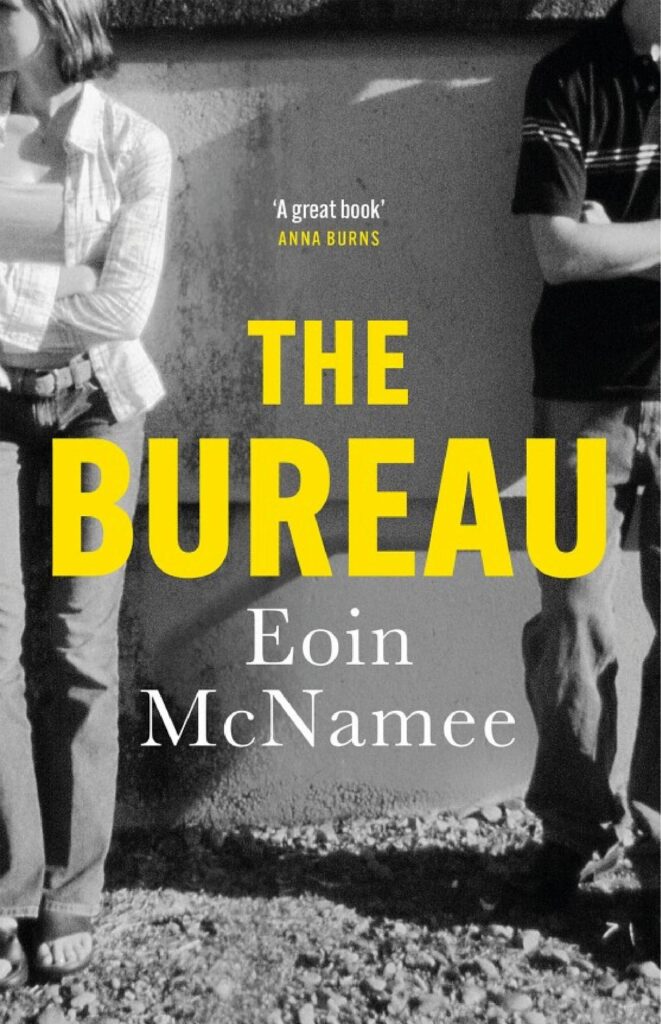
A border means (or meant then, anyway) serious business. Business like scooting south after a bank number or a killing. McNamee’s father ran the eponymous bureau of the book’s title – a currency exchange bureau – the very essence of border business. And no near-border business in those days was entirely free from the shadow of paramilitary or criminal oversight. Diesel washing, smuggling and drug dealing were only a small part of it. The symbiotic relationship between certain individuals and groups, political or purely mercenary, would merit a dozen doctorates, never to be written because the evidence, along with the dumb dead, is buried too deep. McNamee’s book makes a very good – and entertaining – fist of giving a Ground Zero taste of this liminal life though, experience based and otherwise.
This latest novel/non-fiction work, The Bureau, hinges on real border shenanigans. The central narrative is based on a shotgun blast in bed for a lover who was about to jump ship. The underbelly of border, paramilitary and criminal endeavours is there for all to see. No terrorist campaign can be sustained without assistance from the criminal fraternity. And many times, of course, there is a membership overlap between the two worlds, a sort of Venn Diagram where Victor or Tommy has one leg in his local paramilitary unit and the other in a more profitable side hustle. Transferable skills are an important factor too – and certain skills used by the paramilitaries in the Irish situation were imported wholesale from the regular bad boys.
The mythology of the borderlands, from the 70s to the 90s, was once everywhere. Dundalk, just over the border from Newry, was El Paso, a certain pub in the centre of the town needed ‘three knocks and you’re in’ and Northern refugees from the early days of The Troubles were in their second generation. Dundalk was, for all of that, a sort of DMZ. A mirror image of Newry on the northern side, it was the seaside equivalent of the inland Armagh-Monaghan nexus. Paramilitaries nipped over and back between these four city states, especially in the early 70s.
McNamee knows whereof he speaks, and his spake, couched in the ‘I speak as I find’ south Ulster patois, is on the money. The personal narratives, lost love and lost lives in The Bureau, are all fairly grim. The only wonder is, when all is said and done, that so many of the principals came to a violent end but that they lived as long as they did.