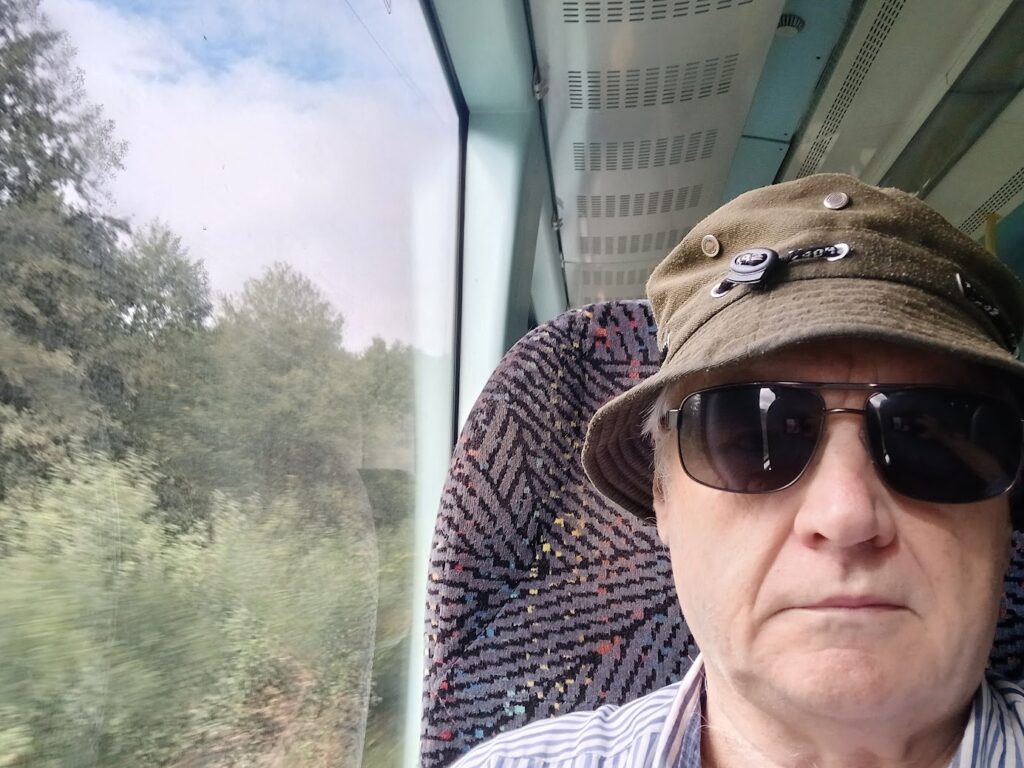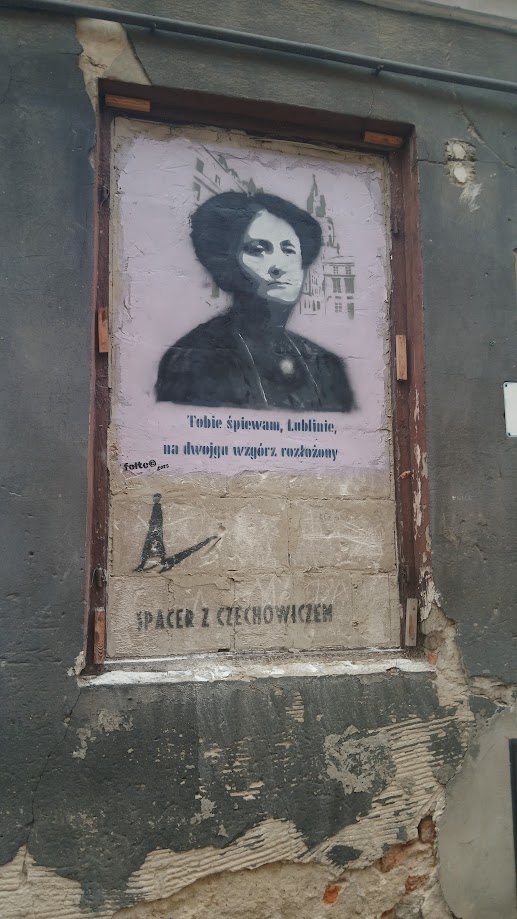
Three things I knew about Lublin: there was a novel by the Nobel prizewinner Isaac Bashevis Singer called The Magician of Lublin, set in 1880’s Poland, it was a favoured location of Stalin for a post-war Soviet spyhole, the Vernichtungslager (formerly a prison camp) of Majdanek was located in the southern suburbs of the southern city. I assumed that there wasn’t much left of Jewish Lublin (correct) and passed on visiting Majdanek – I had ‘done’ Dachau in the early eighties and Auschwitz-Birkenau on a winter’s day in the late nineties. I could read the rest. I wanted to see a little bit more of modern (very) Poland.
I hit the ground not so much running as slouching, by getting off at the train stop before the city (I confused my Lublin Zachodni with my Lublin Glowny). Polish is not so much Greek to me (I have a mouthful or two of that) but more like Finnish, Georgian or Basque even. Inscrutable. I waylaid a fresh-faced lad jogging nearby and he kindly sorted out a taxi for me. The hotel was newish, friendly and the dining room was in the basement, a fallback bomb shelter by the look of it. The hotel was built after an earlier Russian adventure, in 2014. I assume new buildings were nudged to build better basements on the heels of that.
What was left of the older part of Lublin, after the Germans had levelled it, the Soviets smothered it (and the NKVD used Majdanek to torture even more Poles), was fairly well got up. And there was a pleasant, family friendly sort of atmosphere in the older part of Lublin. I spent a couple of days wandering around the autumnal streets – with a little drizzle, here and there. Lublin had the sense of a fairly solid provincial capital and I knew from a shallow dive into Polish history that it was on the road from all sorts of important places to other important places, tradewise. It had also suffered greatly under Mongol and Tatar incursions. Current and historical maps of central and eastern Europe, always show amazing shifts in borders, states, language, ethnicities and religions, depending on the current political tensions. One minute your city is German, the next Polish. A place is Polish one time, Ukrainian the next. And so on.
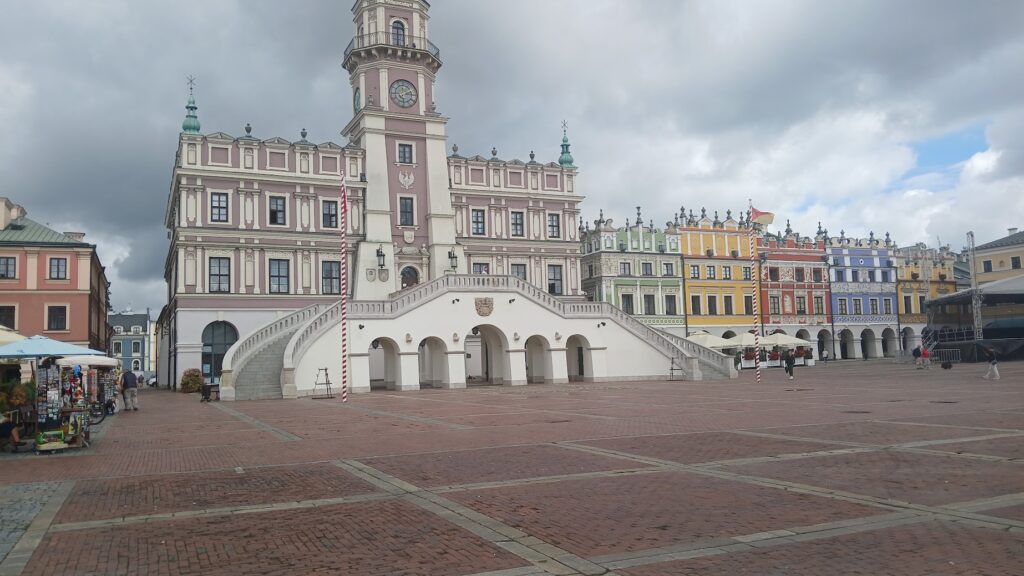
I took a trip further south to Zamosc (accent on the first syllable, please) on my penultimate day. The flat countryside and the birch trees (Birkenau?) always sent a chill through me. I imagined not so much summer fields of sunflowers and cabbages but German Tiger Tanks and Soviet T34s charging across the flat, dark soils. Zamosc, like Lublin, has old class. The main square is based on an Italian design. Many of the larger buildings, churches and so on, tend towards a more eastern style. The square itself was fairly deserted when I was there that morning so I sat and had a pint of pleasingly bitter Polish beer and scanned the emptiness. A local man suggested I try a restaurant called the Asian Bar, if I wanted to eat hearty Polish food. And they were right: the Asian Bar was neither Asian nor a bar. (Don’t ask- I don’t know). The grub was reminiscent of (former) meals I had eaten in (former) Yugoslavia, in the seventies: soft, sweet spuds, veg, light gravy and meatloaf. Celto-Slav stuff.
In the early evening, waiting at the station in Zamosc for the first train in the link home, there was a loud noise in the distance. All the locals glanced at one another, referencing, as they say in the best psychology books. Then, satisfied that the sound was innocuous, and not connected to Realpolitik at the far side of the border, they went back to chatting in low voices.
The following morning, in Lublin, I breakfasted in the dining room/bomb shelter. In the space of ten minutes, as I was checking out, I met a Presbyterian minister from Donegal (of Laois origin), a Polish lecturer in medicine from Gdansk (who insisted she wasn’t a doctor), a Beatles obsessed receptionist who knew his stuff. And a large, chatty English lad in his thirties, heading back home from driving a fridge truck over from the UK to Poland for his Polish boss in London.
‘Have to balance things out. Can only do ninety days in the EU. Bloody Brexit.’
He paid for the taxi to the airport and I bought the breakfast beers there. I lost touch with him when we boarded our air train. But I knew he was heading back to Poland with another truck that evening. In Luton, I deplaned (awful, awful word!), then detrained (awfuller), a few hours later, to meet an elderly aunt with a couple of bars of Polish chocolate, north of London.
Chocolate is culture too, don’t you know.